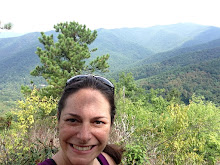
I'm back home in Tennessee for a few days before joining my VDS classmates on a new adventure in Namibia. I'm looking forward to traveling with friends this time - 6 weeks of traveling on my own got a little lonely.
I've posted some photos with some of my previous entries...enjoy!
Thursday, July 26, 2007

Tuesday, July 17, 2007
Matale
As I read over my last post, I wondered if I'm making too much of a distinction between the ethnic groups here. The Tamils in Sri Lanka have certainly faced particular difficulties because of their ethnic background, and the "Indian" Tamil estate workers especially. But there are also many very poor Sinhalese villagers as well. And repeatedly during my stay here in Sri Lanka, people (of various backgrounds) have reminded me that they don't feel any anamosity towards the other ethnic group. They have repeatedly told me that they all want peace, and that they can all get along.
One of my Satyodaya field visits was to an area outside of Matale called Luckyland, also a former plantation area that is no longer functioning as a large tea estate. Now, it's more of a quiet hilltop village, where Tamils and Sinhalese live side by side. All of them say that their main problem is a lack of jobs in this remote area, now that the tea plantations have been divided up into small plots.
This village also faces problems from a lack of good infrastructure. Residents have to trek long distances up and down steep slopes in order to carry water to their homes. (I had a hard enough time climbing up the slopes to visit their houses without carrything anything). The main water source sits a 9-12 kilometer hike uphill from the homes, although there are a few smaller wells closer to the houses that they can use when it's not the dry season.
After Satyodaya helped the residents organize themselves into a Community People's Organization, the first thing the CPO decided to do was install a water supply system. They said they had been asking the government for help with this for nearly 20 years, with no results. So, they decided to do it themselves. I think they did manage to get some funding for it from the government with the collective voice of the CPO. And Satyodaya also helped to provide some of the initial funding. So, the villagers began the labor-intensive work of digging trenches for the 12 kilometers of pipes down from the water source, and mixing cement and installing spouts along the way at each house. After nearly a year of work, they are almost done and expect to have water supplied to each house within 2 weeks of my visit. Each household will pay a minimal fee each month to pay a caretaker, who will be responsible for maintenance.
When I visited on a Sunday afternoon, there were several villagers mixing cement near one house...men and women, Sinhalese and Tamils, working side by side. The majority of the villagers here are Sinhalese, but they elected a Tamil man as the president of their CPO. These hardworking, generous people seemed to have a strong sense of fellowship with one another. They also warmly welcomed me, and at each home I visited I was sent away with something - kitul (like hardened molasses) from their palm trees, jambu (a small red fruit) from their garden, papaya to take back to one of the Satyodaya staff who has been ill...
They may have a lot of poverty and structural problems to overcome in Luckyland, but their sense of community and shared identity is much stronger than in many much wealthier places.
One of my Satyodaya field visits was to an area outside of Matale called Luckyland, also a former plantation area that is no longer functioning as a large tea estate. Now, it's more of a quiet hilltop village, where Tamils and Sinhalese live side by side. All of them say that their main problem is a lack of jobs in this remote area, now that the tea plantations have been divided up into small plots.
This village also faces problems from a lack of good infrastructure. Residents have to trek long distances up and down steep slopes in order to carry water to their homes. (I had a hard enough time climbing up the slopes to visit their houses without carrything anything). The main water source sits a 9-12 kilometer hike uphill from the homes, although there are a few smaller wells closer to the houses that they can use when it's not the dry season.
After Satyodaya helped the residents organize themselves into a Community People's Organization, the first thing the CPO decided to do was install a water supply system. They said they had been asking the government for help with this for nearly 20 years, with no results. So, they decided to do it themselves. I think they did manage to get some funding for it from the government with the collective voice of the CPO. And Satyodaya also helped to provide some of the initial funding. So, the villagers began the labor-intensive work of digging trenches for the 12 kilometers of pipes down from the water source, and mixing cement and installing spouts along the way at each house. After nearly a year of work, they are almost done and expect to have water supplied to each house within 2 weeks of my visit. Each household will pay a minimal fee each month to pay a caretaker, who will be responsible for maintenance.
When I visited on a Sunday afternoon, there were several villagers mixing cement near one house...men and women, Sinhalese and Tamils, working side by side. The majority of the villagers here are Sinhalese, but they elected a Tamil man as the president of their CPO. These hardworking, generous people seemed to have a strong sense of fellowship with one another. They also warmly welcomed me, and at each home I visited I was sent away with something - kitul (like hardened molasses) from their palm trees, jambu (a small red fruit) from their garden, papaya to take back to one of the Satyodaya staff who has been ill...
They may have a lot of poverty and structural problems to overcome in Luckyland, but their sense of community and shared identity is much stronger than in many much wealthier places.
Tuesday, July 10, 2007
Craigingilt
 My first field visit with Satyodaya was to Craigingilt, a former tea estate that has now been parceled out to local people. These subdivided plots of land were given to the Sinhalese villagers who lived in the surrounding villages, not to the Tamil tea pluckers who had worked on the estate for generations. Of course, this may be an attempt to rectify the British actions of the 1800's, when they took land for their coffee and tea plantations without consulting the local Sinhalese residents. That was before the Tamil laborers were brought in from southern India to work on the estates (sidenote: I read an interesting article today that said the British had originally considered importing workers from Africa, but that Britain had just outlawed slavery; so instead they "employed" these impoverished Indians at the lowest wages possible instead).
 So, with very little tea plantation work available, and without land of their ow
 n, the Tamils in Craigingilt were left to seek odd jobs or other agricultural labor. Satyodaya began organizing them, helping them to build a community center and form a CPO (Community People's Organization). Some got loans to start their own business (I visited one couple who sew duffle bags). Even though most of them no longer worked on the estates, they were still living in the tiny, dingy linerooms that had been provided by the plantation. So, they petitioned the government for some land (which they bought with a no-interest loan from Satyodaya) and began building their own homes. The people did the unskilled labor themselves, and Satyodaya employed local Sinhalese masons to help with the skilled building.
The houses have two bedrooms, a living room, and a kitchen. There is a common bathing area. All of the homes have small gardens, and some grow spices or keep bees to earn a little extra income. The people also petitioned the government for electricity connections. Because they all came together as a community and stood up for their rights, they were able to get responses from government officials who had long ignored this community (except maybe at election time). The community is really beautiful, set in the hills with lush green trees and fields surrounding them. A neat stone stairway climbs up (and up, and up) from house to house.
At the top of the hill, the CPO has started a pre-school, which helps the children get a head start on their education, so that they will be able to get better jobs than their parents. The parents pay a small fee each month for the teacher's salary. Everything that they've done has been through their own efforts, with Satyodaya only providing technical support and some loans to get them started.

Now this community of about 70 families has a good, friendly relationship with their Sinhalese neighbors. They say that previously, the people in the neighboring villages looked down on them and wouldn't associate with them. But now, they have the dignity of owning their own homes and of knowing how to stand up for themselves. Now, the different ethnic groups attend each others' festivals and community programs. This area is one of Satyodaya's biggest success stories, and they no longer have field staff responsible for Craigingilt, because all the programs are planned and carried out by the residents themselves.
Monday, July 9, 2007
Elkaduwa

Today I got to see the plantation sector from a different perspective. Through a network of mutual friends, I had contact info for a British guy who is managing a small private tea estate about 45 minutes outside of Kandy, so he took me up to see it and talk a bit about his experience. He's been managing the place for about a year, on behalf of his uncle who owns it. They have about 12 families working for them, who live on the estate in the traditional line houses (which are pretty run down, like on most of the plantations).
After all of the discouraging (and disparaging) things I'd been hearing on my other visits about plantation owners and supervisors who don't care about the laborers, it was refreshing to see that this management has made a sincere effort to address the conditions in which the workers live. But even so, they are struggling to figure out the most effective and productive way to go about this. They started by installing electricity in the workers' homes, but without really consulting the workers themselves, so it wasn't as beneficial to them as the managers had imagined it might be. Turns out that after living without electricity for so long, the workers weren't all that interested in paying to have electric lights.

They have also tried to raise wages a bit, but met protests from the surrounding estate owners who couldn't (or wouldn't) raise wages above the nationally-mandated minimum (at least the owners in this area actually pay the minimum wage - from what I hear, not all do). So, they try to give small bonuses or other ammenities when they can. They're installing better water supply lines, bathing areas, and toilets, and their long term plan is to improve the housing. And they're trying some other approaches to raise small amounts of additional income/resources, like gardens, bee keeping, and a small fish farm. Still, life for the estate workers isn't easy, and for the small estates that most of the tea is grown on now, it isn't always easy to make a profit. Instead of the large corporate-like tea plantations that once dominated the tea sector in Sri Lanka, much of the tea is now grown on small plots, and then sold to companies which process and package the tea. What does all of this mean for those of us who buy and drink tea in the west? Good question...I haven't quite figured that out yet. It's hard to know which are the "good" brands of tea to support when the inputs come from so many different, smaller companies that could have varying levels of treatment for their workers.
After all of the discouraging (and disparaging) things I'd been hearing on my other visits about plantation owners and supervisors who don't care about the laborers, it was refreshing to see that this management has made a sincere effort to address the conditions in which the workers live. But even so, they are struggling to figure out the most effective and productive way to go about this. They started by installing electricity in the workers' homes, but without really consulting the workers themselves, so it wasn't as beneficial to them as the managers had imagined it might be. Turns out that after living without electricity for so long, the workers weren't all that interested in paying to have electric lights.
They have also tried to raise wages a bit, but met protests from the surrounding estate owners who couldn't (or wouldn't) raise wages above the nationally-mandated minimum (at least the owners in this area actually pay the minimum wage - from what I hear, not all do). So, they try to give small bonuses or other ammenities when they can. They're installing better water supply lines, bathing areas, and toilets, and their long term plan is to improve the housing. And they're trying some other approaches to raise small amounts of additional income/resources, like gardens, bee keeping, and a small fish farm. Still, life for the estate workers isn't easy, and for the small estates that most of the tea is grown on now, it isn't always easy to make a profit. Instead of the large corporate-like tea plantations that once dominated the tea sector in Sri Lanka, much of the tea is now grown on small plots, and then sold to companies which process and package the tea. What does all of this mean for those of us who buy and drink tea in the west? Good question...I haven't quite figured that out yet. It's hard to know which are the "good" brands of tea to support when the inputs come from so many different, smaller companies that could have varying levels of treatment for their workers.

The estate I visited today was also quite beautiful and peaceful - a very pleasant place to spend the day. They have a guesthouse in the big old bungalow, with amazing views of the surrounding hills, a nearby waterfall, and a swimming pool. Maybe a successful future for the Sri Lankan tea industry will include a mix of tourism and production.

I have a few more days here in Kandy, then I'm hoping to do a little traveling around and sightseeing. I had gotten my hopes up that I might be able to visit Jaffna, where I used to live, and catch up with my friends there. Unfortunately, after talking with my old boss, it seems like it's not a good idea to head up there, since the security situation is uncertain there right now. So, I'm disappointed about that. But maybe other interesting adventures await...
Sunday, July 8, 2007
Tea time

My visit to Satyodaya (the name means 'dawn of truth') in Kandy, Sri Lanka started out slow. The first few days, I mainly was just hanging out in their office/library reading reports and articles about their work, and talking to their staff. Don't feel TOO sorry for me though, because their office/library/guesthouse is on a hill overlooking Kandy lake and has a spectacular view. And the staff are pretty interesting as well. The organization (they prefer to call it a movement) was started by a Jesuit priest, Father Paul Caspersz, who is still with Satyodaya even though he just celebrated his 80th birthday last week. He has a great memory, and lots of stories about the problems the Indian Tamil tea estate workers have faced, and how Satyodaya has worked with them (and their Sinhalese neighbors) over the past 30 years.
The group started as an intentional living community and research center, bringing together all the various ethnic/religious/linguistic groups of Sri Lanka. As ethnic tensions grew over the years, their work extended to community organizing and development. They have a special interest in improving the economic conditions of the laborors on the tea plantations, but in the process they strive to build relationships between the Tamils and the Sinhalese ethnic groups (and Muslims as well, when any are present in the area). I've been especially impressed with how well they do this - it is quite a hopeful sign in a country that has struggled with nearly 3 decades of ethnic warfare.
The other thing that is impressive about the movement is the way they develop local leadership in the communities. In all of the development projects they are involved in, they only provide the initial training and access to resources - the local residents themselves make the decisions, do the work, and maintain the projects. They always start their involvement in an area by encouraging the residents to form a CPO (community people's organization) and build a community center.

I've visited three very different field sites so far, all former tea estates that have mostly been divided into smaller private plots or turned into villages - all with a lack of employment for the local people since the larger tea estates are no longer functioning. At the first, Craigingilt, the community was able to petition the government to buy a plot of land and then build simple but decent homes with no-interest loans from Satyodaya (reminded me of my Habitat days). In the second, Erin, the former tea pluckers are still living in the cramped, dingy linerooms provided by the estate. And today we went to Luckyland, where the multi-ethnic community has banded together to build a water system that will pipe clean drinking water to every house in the village. I'll write about these in more detail later.
I'm actually reading Jeffrey Sach's "End of Poverty" right now, which is making it especially interesting to contemplate economic development from both ends of the spectrum, since he approaches the problem of poverty from a governement perspective and what can be done on a macro-economic level to improve an entire country's financial situation, and in the meantime I'm seeing a very personal view of how poverty effects individuals at the village level - but all the buzzwords like globalization and immigration and such are very relevant to the situation of these villagers living at the end of a twisting dirt road on the top of a mountain... (as a side note, on the bus ride today home from Luckyland I saw a 'taco bell' sign on a small shop that I'm sure only serves sri lankan curries, and an 'ikea' sign on a local furniture store in a small village, too!).
The group started as an intentional living community and research center, bringing together all the various ethnic/religious/linguistic groups of Sri Lanka. As ethnic tensions grew over the years, their work extended to community organizing and development. They have a special interest in improving the economic conditions of the laborors on the tea plantations, but in the process they strive to build relationships between the Tamils and the Sinhalese ethnic groups (and Muslims as well, when any are present in the area). I've been especially impressed with how well they do this - it is quite a hopeful sign in a country that has struggled with nearly 3 decades of ethnic warfare.
The other thing that is impressive about the movement is the way they develop local leadership in the communities. In all of the development projects they are involved in, they only provide the initial training and access to resources - the local residents themselves make the decisions, do the work, and maintain the projects. They always start their involvement in an area by encouraging the residents to form a CPO (community people's organization) and build a community center.
I've visited three very different field sites so far, all former tea estates that have mostly been divided into smaller private plots or turned into villages - all with a lack of employment for the local people since the larger tea estates are no longer functioning. At the first, Craigingilt, the community was able to petition the government to buy a plot of land and then build simple but decent homes with no-interest loans from Satyodaya (reminded me of my Habitat days). In the second, Erin, the former tea pluckers are still living in the cramped, dingy linerooms provided by the estate. And today we went to Luckyland, where the multi-ethnic community has banded together to build a water system that will pipe clean drinking water to every house in the village. I'll write about these in more detail later.
I'm actually reading Jeffrey Sach's "End of Poverty" right now, which is making it especially interesting to contemplate economic development from both ends of the spectrum, since he approaches the problem of poverty from a governement perspective and what can be done on a macro-economic level to improve an entire country's financial situation, and in the meantime I'm seeing a very personal view of how poverty effects individuals at the village level - but all the buzzwords like globalization and immigration and such are very relevant to the situation of these villagers living at the end of a twisting dirt road on the top of a mountain... (as a side note, on the bus ride today home from Luckyland I saw a 'taco bell' sign on a small shop that I'm sure only serves sri lankan curries, and an 'ikea' sign on a local furniture store in a small village, too!).
Saturday, June 30, 2007
It's a small, small world
I was a bit surprised when I ran into former students and colleagues from Sri Lanka at TTS, but since it is affiliated with the church I worked with in Jaffna, it wasn't a huge shock. But yesterday, I was REALLY astounded when I bumped into a former Jaffna College student on the crowded streets of Chennai, one of the biggest cities in southern India.
I had only been in town for about an hour, and had ventured out to find something to eat. I'd gone less than a block from my hotel when someone came up beside me and said hello - I turned, expecting to see a taxi driver looking for business, but instead it was Rajeevson, one of my favorite former students, who used to teach me the words to all of the popular Tamil film songs. He had just arrived in Chennai himself the previous day, to enroll in a university there (he was studying at the University of Jaffna, but the classes meet so irregularly with the political situation in Sri Lanka now that he found it difficult to make any progress). So, I spent the afternoon sightseeing with he and his roommate (another resident of our old village in Jaffna). It was nice to have some friendly company in an unfamiliar city.
This morning I flew from Chennai to Colombo, Sri Lanka. I enjoyed my time in India, but I'm really excited to be back here again, and catch up with more old friends (on purpose, this time).
I had only been in town for about an hour, and had ventured out to find something to eat. I'd gone less than a block from my hotel when someone came up beside me and said hello - I turned, expecting to see a taxi driver looking for business, but instead it was Rajeevson, one of my favorite former students, who used to teach me the words to all of the popular Tamil film songs. He had just arrived in Chennai himself the previous day, to enroll in a university there (he was studying at the University of Jaffna, but the classes meet so irregularly with the political situation in Sri Lanka now that he found it difficult to make any progress). So, I spent the afternoon sightseeing with he and his roommate (another resident of our old village in Jaffna). It was nice to have some friendly company in an unfamiliar city.
This morning I flew from Chennai to Colombo, Sri Lanka. I enjoyed my time in India, but I'm really excited to be back here again, and catch up with more old friends (on purpose, this time).
Wednesday, June 27, 2007
Orulai

Last night I got to experience the powerful and pulsating ritual of orulai, a monthly event here at TTS. Orulai means "one pot", and is meant to demonstrate solidarity with the poor through the sharing of a common meal, but it is also a loud and joyful celebration of drumming and dancing and community spirit.
This festival grew out of the lenten tradition of eating kanchi, or rice porridge, on Ash Wednesday. At the suggestion of students, this simple meal bec
 ame a monthly tradition, to help students remember and experience the life of the poor. Eventually, this practice was combined with another common meal initiated by one of the faculty in which the community came together to prepare and eat a simple meal to demonstrate the rejection of caste, class, and gender barriers (there are taboos against different castes eating together).
So, Orulai was born, and now is organized on the last Wed. of every month. All the students come together and cook the kanchi in clay pots over small fires. They create a traditional design on the ground and place all of the pots in a circle around the drawing. Each person contributes a small, equal amount towards the food, so that money and labor for the meal are equally shared by each person, regardless of class or background.

As the meal is being cooked, some student beat drums (the parai, a traditional drum of the Dalits), and there's singing, shouting, and a generally festive atmosphere. Then, as the kanchi finishes cooking, the drumming gets more intense and the 'invitation' portion of the festival begins. The crowd forms a procession, led by the drums, and parades through the campus (a large, residential area that is almost like an entire village), inviting everyone who hears them to come for the dinner - faculty, manual laborers, family members, etc... Every so often, the drummers stop and form a circle, and people dance frantically in the middle, and the invitation is shouted out by the group.


Once the procession makes its way back to the pots (sweaty and tired from all that dancing), of course there is more drumming and dancing, especially in the circle around the pots. First, the women were invited to dance in the center, then the men, and finally the transgendered persons (who seem to have a relatively large presence in India, although they often tend to
 be excluded from society). Then everyone sat around the pots and had songs and prayers that renewed their committment to the poor. The smaller pots of kanchi were all poured into one large pot, and the meal was served to everyone.
It was a really moving and fun experience, dancing along with everyone and having a good time, but also remembering the meaning behind the ritual.
A handout describing the meaning of the ceremony was given to me, which I'll summarize below:
- "Orulai Kanchi" reminds us that we are surrounded by the poor and the need for our committment and participation in their struggles of liberation.
- Orulai emphasizes that we are all children of God and need to break the barriers of caste, class and patriarchy.
- Orulai brings us into the family of the children of God, breaking narrow family bonds.
- The simple and equal contribution for our Orulai makes everyone equal.
- Orulai stands against globalization and its manifestation against humankind, especially the poor and nature, such as the fast food joints that have penetrated out society and deplete our economy.
- Orulai is proof for abundance in the life of sharing and living. If the community shares resources and labor equally there will only be abundance.
Subscribe to:
Posts (Atom)